Overview
I’m building Arrrc, an AI health companion for Nigeria. It helps people understand what may be happening with their health and what to do next, before they spend money or time on a hospital visit. It is in pilot testing with more than 100 beta testers, and doctors help train it and review its guidance. This page covers the decisions that mattered most: what Arrrc is allowed to say, how it handles urgency, and how doctors stay involved.
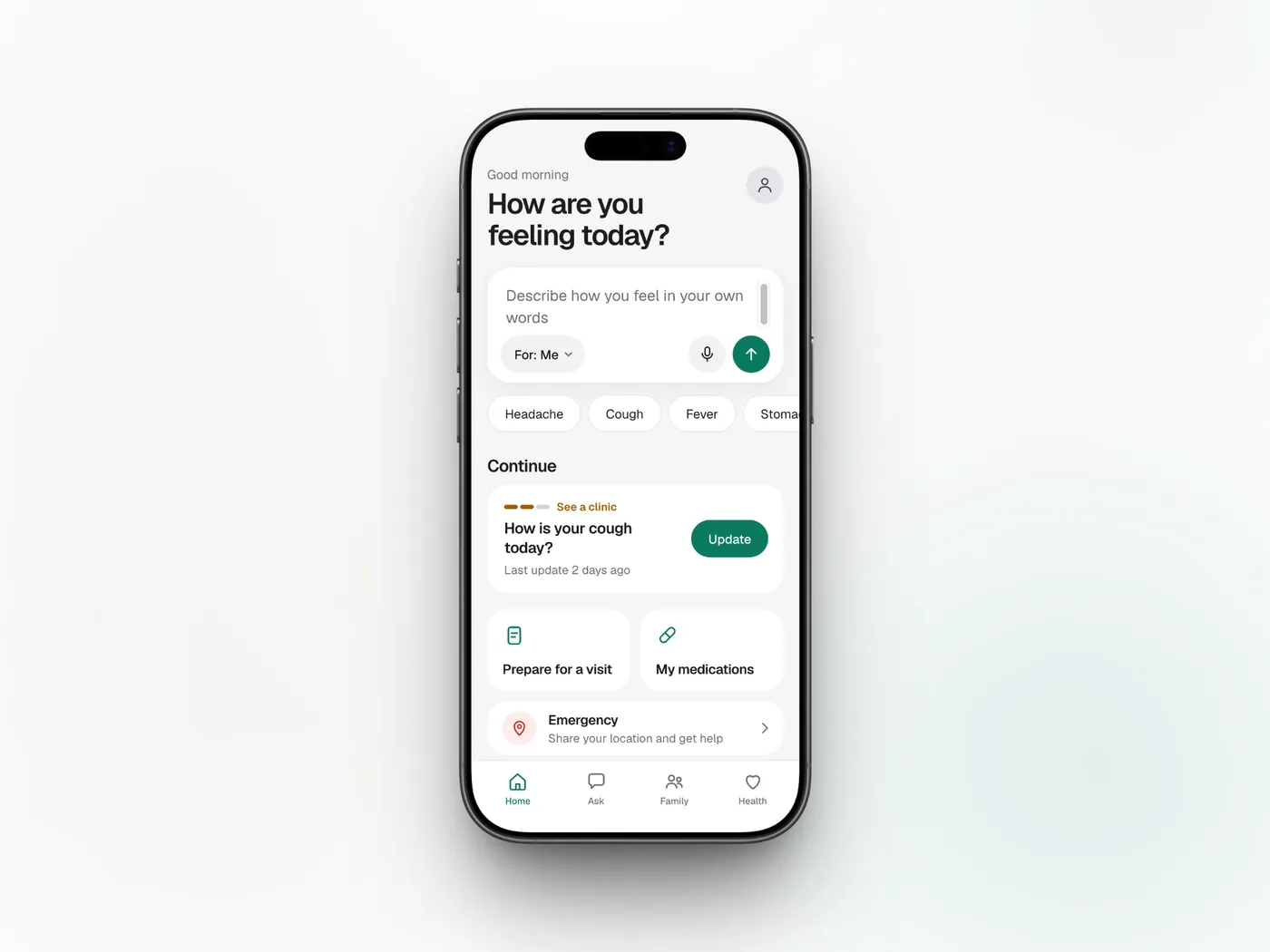
The problem
Around 70% of healthcare spending in Nigeria is paid out of pocket, so a hospital visit is a financial decision as much as a medical one. Consultation fees, transport, tests, medicine, and a day away from work all add up. So people guess. They search the internet, ask a WhatsApp group, self-medicate, or wait. Minor issues crowd clinics, and serious ones arrive late and cost more to treat.
What I kept noticing is that people rarely want a diagnosis. They want confidence. Should I be worried? Can I wait? What do I do next? Nothing trustworthy answers those questions before someone reaches a clinic. That gap is what Arrrc is built for.
Design constraints
- It can be wrong. Any model can give a confident, incorrect answer, and in health the cost of that is a person’s wellbeing.
- Cost shapes behavior. Users are deciding whether a visit is worth the money, so vague advice like “consult a doctor” isn’t enough.
- Trust has to be earned. Many people are wary of AI advice, so every recommendation needs a reason attached.
- It must not replace doctors. The goal is getting people to the right care sooner and better prepared, not keeping them away from it.
Decision 1: Never diagnose, always explain
The easiest version of this product says “you have pneumonia.” I ruled that out early. False certainty is the most dangerous failure in health AI, and it fails in both directions: it frightens people who are fine and reassures people who aren’t.
Instead, Arrrc explains what a set of symptoms may be consistent with, names the warning signs to watch for, and says clearly why it is recommending a particular next step. It asks follow-up questions first, and factors in age, medical history, medications, and allergies, so the guidance fits the person and not the average search result.
Decision 2: Make urgency impossible to miss
Arrrc never jumps straight to an answer. It asks follow-up questions first, because the same symptom can mean very different things depending on context. A cough that started three days ago is a different situation from one that has lasted three weeks, and a fever in a child is different from one in an adult. Duration, progression, age, and existing conditions all shape the recommendation.
Every conversation then resolves into one of three outcomes: monitor at home with specific precautions, see a provider within a day or two, or seek emergency care now. Each comes with the reasoning behind it, because people act on a reason far more readily than on an instruction. When the picture is unclear, Arrrc leans toward the safer recommendation.
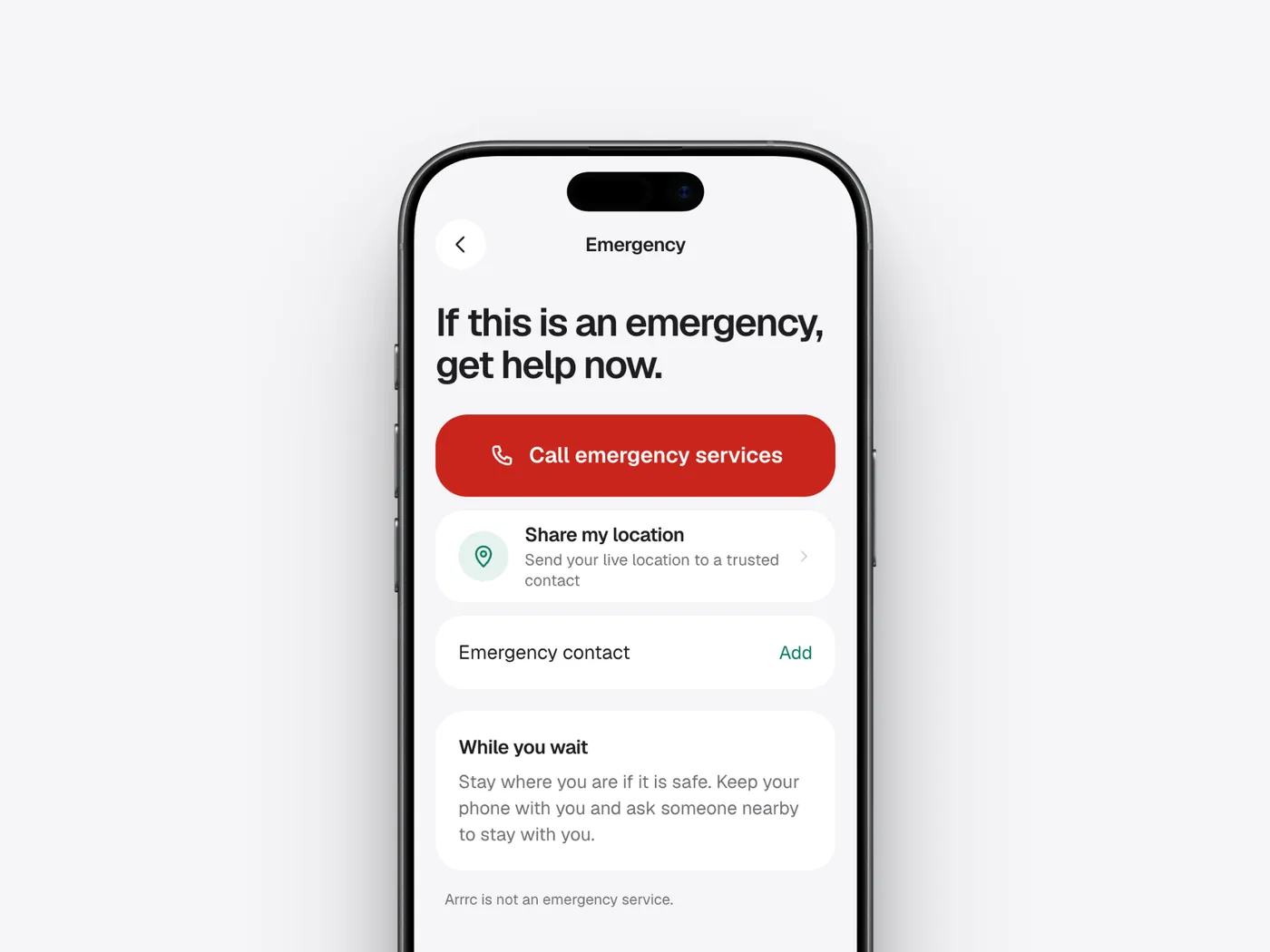
The emergency screen is where this decision is most visible. When symptoms point to something serious, the message isn’t buried in a chat bubble or softened with hedging. The screen is built so someone frightened at 2 a.m. knows exactly what to do next.
Decision 3: Keep doctors in the loop
Health is too high-stakes to let an AI grade its own work. Doctors help train Arrrc and review its guidance. That means how it reasons about symptoms, and the point at which it tells someone to seek care, is checked by people with clinical training and not by me alone. Their feedback goes back into how Arrrc responds.
This also shapes how Arrrc presents itself. It never claims to replace a clinician, it says plainly what it can’t determine, and it directs people to professional care whenever it’s needed.
Decision 4: Personalize with permission
Generic health advice is what people already get from a search engine. What makes Arrrc more useful is context: with the user’s permission, it remembers relevant history such as past conversations, medications, and allergies, so guidance gets more specific over time instead of starting from zero every conversation.
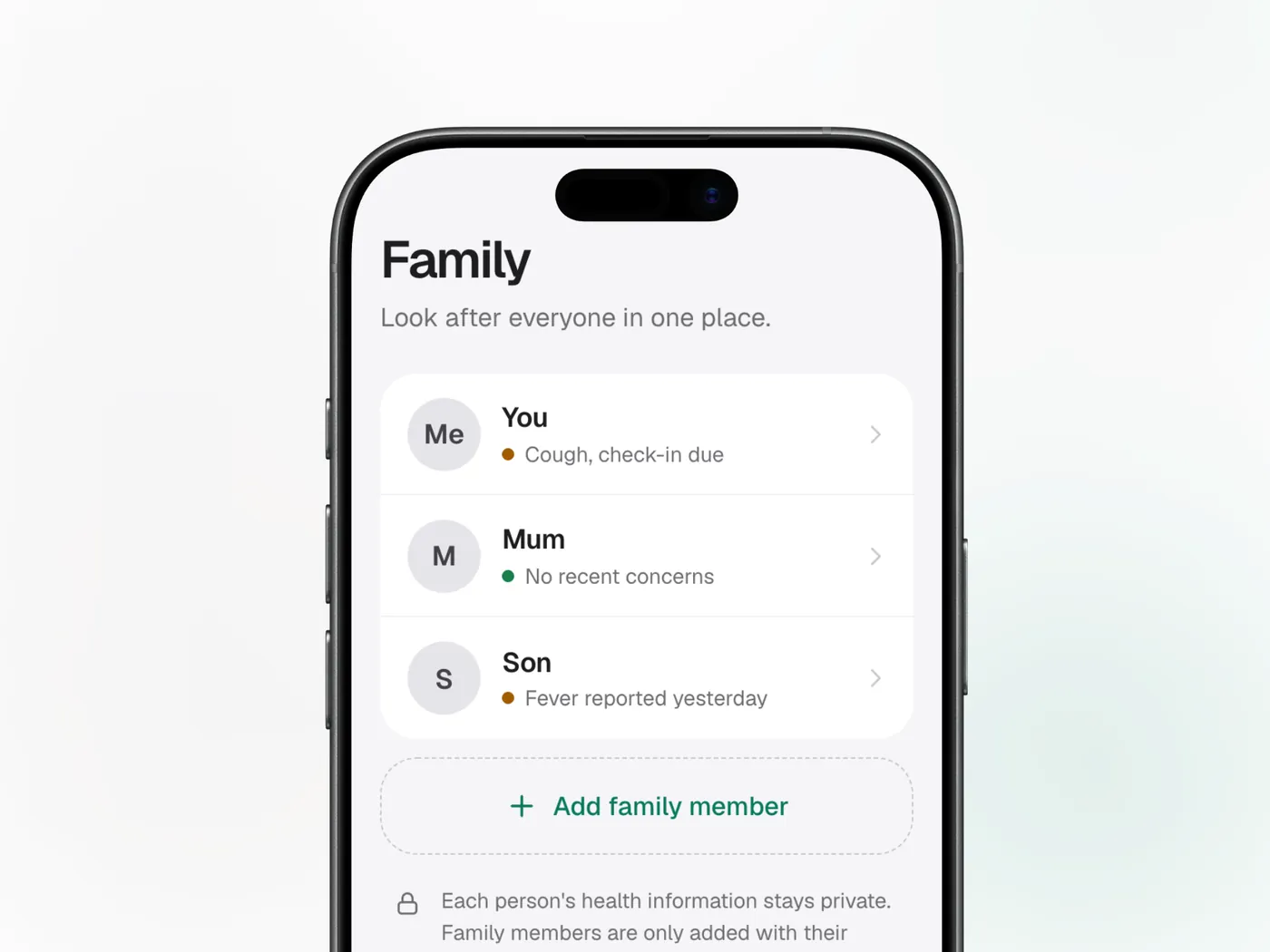
Because health information is sensitive, personalization is built around consent. The same principle applies to family use. A parent managing a child’s health, or an adult supporting an ageing parent, can do so with appropriate privacy and consent.
Personalization also pays off at the clinic. Arrrc helps users organize symptom timelines, medications, and questions before an appointment, so consultations spend less time on history-taking and more on care.
What I’ve seen so far
More than 100 beta testers are using Arrrc in their daily lives, bringing it real symptoms, medication questions, and worries about family members. That real-world use is what shows where the guidance is clear and where it needs to be sharper, and it’s why I trust the product more now than I did when it was a prototype.
What’s next
The next step is a clinic pilot. I want to test the part of the journey where Arrrc matters most: getting patients to the right care sooner and helping them arrive prepared. The questions I care about are whether consultations become clearer, whether patients feel more confident, and whether clinicians spend less time piecing together history.
Takeaway
In health, the most important design question isn’t what the AI can say. It’s what it should refuse to say, and when it should hand the person to a human.
Related: HeatSafe, an AI-assisted early warning system for heat and air quality, and Money Autopsy, which uses AI to interpret personal financial behavior.